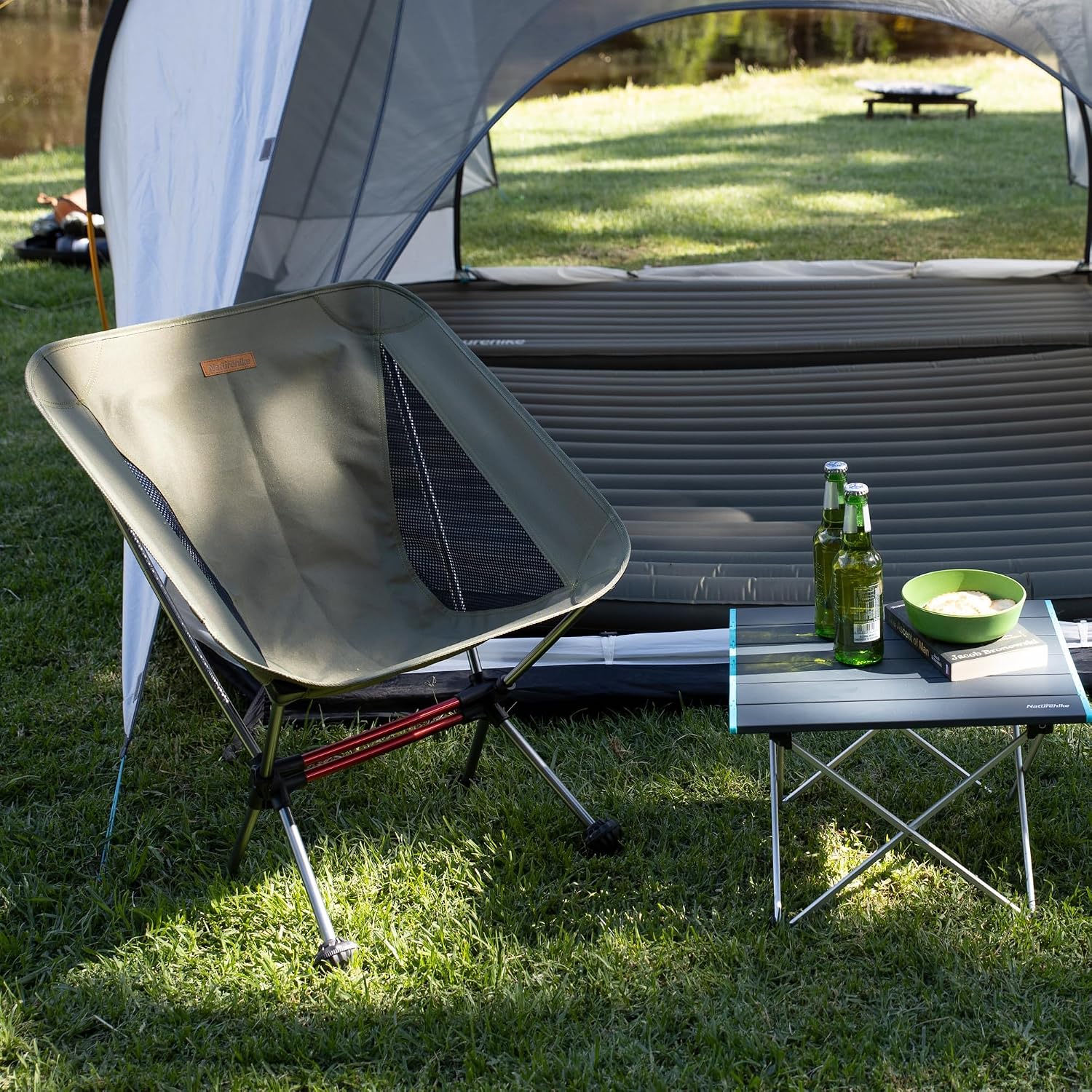
Picture this: you’ve just summited a ridge after a 9-mile approach, the light is going golden, and you want to actually sit down and enjoy it — not crouch on a rock or collapse cross-legged on damp ground for the next hour. That’s the moment a backpacking chair earns its place in your pack. But “lightweight” is a word manufacturers use loosely. A chair marketed as “ultralight” might tip the scale at 2 pounds — which sounds fine until you realize the best options in the category clock in under 15 ounces. In this guide, we’re cutting through the marketing language and ranking the most-discussed ultralight chairs by two metrics that actually matter when you’re counting grams: real packed weight (what the chair weighs with its stuff sack, poles, and all hardware included) and packed size (the compressed dimensions of the bundle you’re stuffing into your bag). By the end, you’ll have a clear decision framework built around your trip type and tolerance for trade-offs.
Why “Ultralight” Doesn’t Mean the Same Thing Twice
The ultralight backpacking community — people who obsess over trimming pack weight to under 10 pounds total — defines ultralight chairs as anything under 1 pound (about 450 grams). The broader outdoor gear market uses “ultralight” to mean anything noticeably lighter than a standard folding camp chair, which typically runs 4–6 pounds. That gap matters enormously when you’re evaluating a $60 option against a $250 one.
There are two dominant construction styles you’ll encounter:
Sit pads with optional leg inserts (like the Therm-a-Rest Z-Seat or Crazy Creek models) essentially turn your sleeping pad into a recliner. Practically weightless, nearly zero packed volume, but limited back support and a learning curve for finding a comfortable position.
Pole-frame chairs use collapsible aluminum or carbon-fiber poles — think tent poles — threaded through a fabric seat. These pack into a stuff sack roughly the size of a 1-liter water bottle and actually look and feel like a chair. This is the category most buyers mean when they search “ultralight backpacking chair,” and it’s where the interesting comparison territory lives.
Gear Junkie’s 2025 best backpacking chairs roundup confirms that pole-frame chairs now dominate the category for trips of 3+ nights where comfort at camp is a priority. Clever Hiker’s ultralight backpacking chair guide draws a practical line: if you’re going lighter than 1 lb 2 oz (about 510g) in the pole-frame category, you’re paying a premium — either in dollars for carbon-fiber poles or in durability for thinner fabrics.
The Real Numbers: A Ranked Comparison
Here’s where the spec sheets get interesting. Manufacturer-listed weights don’t always include the stuff sack or all hardware, so owner reports from REI Q&A threads and gear forums frequently show 5–15% higher real-world weights. The figures below reflect published specs where we note them, and owner-reported scale weights where those diverge meaningfully.
By the numbers — pole-frame ultralight chairs, lightest to heaviest:
| Chair | Published Weight | Owner-Reported Weight | Packed Size (approx.) | Price (2026 MSRP) |
|---|---|---|---|---|
| Helinox Chair Zero | 1 lb 1 oz (490g) | ~510g with bag | 3.5” × 13” | $199 |
| REI Co-op Flexlite Air | 1 lb 2 oz (510g) | ~520g | 4” × 14” | $159 |
| Helinox Camp Chair One | 1 lb 10 oz (737g) | ~750g | 4” × 14.5” | $199 |
| Crazy Creek HEX 2.0 Original | 9.5 oz (269g) | ~280g | Flat/foldable, ~1.5” thick | $54 |
| Therm-a-Rest Lite Seat | 3.5 oz (99g) | ~100g | Sits flat inside pack | $35 |
(Sources: Helinox published specifications 2025; REI Co-op Flexlite Air product page 2025; Crazy Creek product listing; Therm-a-Rest published specs. Prices reflect 2026 MSRP as of May 2026 and are subject to seasonal change.)
Breaking Down the Top Contenders
Helinox Chair Zero — The Weight-to-Comfort Benchmark
The Chair Zero is the chair that redefined what the category could be. At 490g published (owners consistently report landing right around 510g including the stuff sack on kitchen scales, per aggregated REI Q&A responses and gear forum reports compiled in Outside Online’s 2025 ultralight gear guide), it sits at the top of the pole-frame category on weight performance.
The trade-off is seat geometry. The Chair Zero sits lower to the ground than the Camp Chair One — roughly 13 inches at the seat — and the seat back is shallower. Owners over 6 feet tall or with hip flexibility issues consistently flag this in long-run reviews. If you’re comfortable sitting cross-legged or have good hip mobility, you likely won’t notice. If you’ve got knee or hip issues, you will.
The other trade-off is rated capacity: 264 lbs (120kg) versus the Camp Chair One’s 320 lbs (145kg). For most solo backpackers, this isn’t a constraint, but it’s worth knowing.
Who this is for: Thru-hikers, fastpackers, and anyone building a sub-15-lb base weight kit who still wants a genuine seat at camp.
REI Co-op Flexlite Air — The Value Equation
The Flexlite Air is REI’s attempt to compete directly with Helinox on weight at a lower price point, and it mostly succeeds. At 510g published (matching owner reports closely), it’s essentially tied with the Chair Zero on weight. The packed size is comparable — about 4 inches in diameter and 14 inches long.
Where it diverges: the seat fabric uses an open-mesh design that improves breathability but reduces the padded feel compared to Helinox’s tensioned fabric. Clever Hiker’s ultralight chair guide notes that the Flexlite Air’s seat can feel slightly hammock-like for heavier users, with more sag than the taut surface of the Chair Zero. For warm-weather backpacking, the airflow is a genuine benefit.
At $159 MSRP versus $199 for either Helinox option, the Flexlite Air saves $40 at full price. REI’s seasonal sales (typically Black Friday and REI Anniversary Sale in May) regularly bring it to $119–$129, which Gear Junkie’s 2025 buying guide flags as one of the better value windows in the category.
Who this is for: Three-season backpackers prioritizing value who don’t mind the slight sag in the seat. Also a smart first pole-frame chair purchase before committing to the Helinox premium.
Helinox Camp Chair One — When You Want to Actually Stay Awhile
If you’re doing basecamp-style trips — driving to a trailhead, hiking 3–5 miles to a site, and staying 3+ nights — the Camp Chair One makes a compelling case. At 737g published (roughly 750g with bag per owner reports), it’s nearly a full pound heavier than the Chair Zero. But the seat height jumps to about 17 inches, which is much closer to a normal chair. The wider back panel and higher weight limit (320 lbs) make it the option that experienced backpackers with longer trips consistently reach for.
Outside Online’s 2025 ultralight gear guide describes the Camp Chair One as “the chair you bring when weight is a consideration but comfort isn’t negotiable.” That framing captures the trade-off cleanly.
Who this is for: Basecamp trips, multi-night stays, taller or heavier users, or anyone who prioritizes evening comfort and is willing to carry the extra 240g.
Sit Pads — The Honest Ultralight Option
The Therm-a-Rest Lite Seat (99g, ~$35) and the Crazy Creek HEX 2.0 (269g, ~$54) represent a fundamentally different approach. These don’t try to be chairs — they’re insulated or padded seat pads that give you ground-level comfort and back support (Crazy Creek) or just insulation from cold ground (Therm-a-Rest).
For sub-10-lb base weight builds, the Therm-a-Rest Lite Seat is nearly invisible in your pack. Clever Hiker’s guide points out that it’s the go-to for alpine climbers and technical mountaineers who want something but can’t justify even 500g for a frame chair. The Crazy Creek HEX 2.0 adds a fold-out back panel that leans against a tree or rock — owners consistently describe it as surprisingly functional once you find a good lean surface.
The honest caveat: both options require you to sit on the ground. For users with knee or hip mobility limitations, or anyone who finds getting up from ground level difficult after a long day of hiking, these are a compromise worth naming explicitly.
The Decision Framework
Here’s the “if X, then Y” breakdown this category demands:
If you’re building a sub-15-lb pack and every gram is a trade-off: Go Chair Zero or Flexlite Air. Weight-to-comfort ratio at this tier is as good as the category gets. Buy the Flexlite Air if you want to save $40; buy the Chair Zero if you want Helinox’s pole durability track record and the slightly firmer seat.
If you’re doing basecamp-style or multi-night trips where comfort compounds: Go Camp Chair One. The extra 240g over the Chair Zero is worth it for 3+ nights. You’ll thank yourself on night two.
If you’re a dedicated ultralight practitioner building a true gram-counting kit: Therm-a-Rest Lite Seat paired with a foam sit pad is the honest answer. It’s not glamorous, but it’s 400g lighter than anything with poles.
If you’re gifting or buying a first backpacking chair for someone newer to overnight trips: The REI Flexlite Air is the safest recommendation — accessible price, proven design, easy REI return policy if it doesn’t work for their body geometry.
One thing we can’t resolve in a spec comparison: seat geometry is intensely personal. If you have a chance to try any of these in-store before a major trip — REI’s floor stock often includes Helinox and their own Flexlite line — that 60-second sit test will tell you more than any number on a spec sheet.
Prices cited reflect 2026 MSRP as of May 2026. Seasonal sales — particularly REI’s Anniversary Sale and Black Friday windows — regularly move Helinox and REI house-brand pricing 15–25% below MSRP. If you’re not in a hurry, setting a price alert is worth the wait.