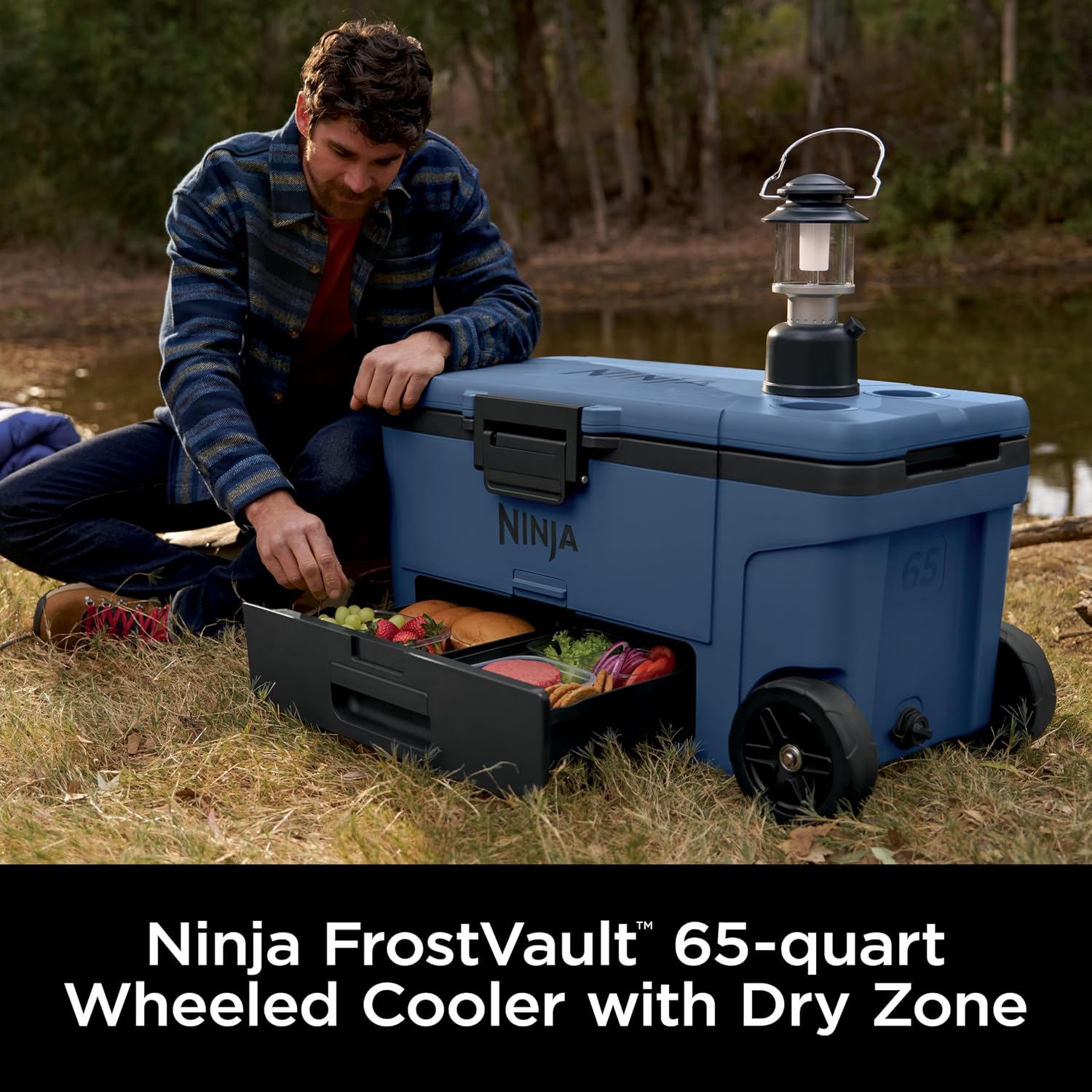
Picture this: you’re 45 minutes into loading the truck for a three-day camping trip and you’ve already unpacked the cooler twice. The sunscreen ended up wet. The phone charger is somewhere under the ice. Your trail mix got soaked. If you’ve done any amount of car camping or overlanding — that’s driving off-road to set up a camp rather than hiking in — you know that the cooler is actually two problems: keeping things cold, and keeping everything that shouldn’t get wet away from the meltwater. Ninja, a brand most people associate with kitchen blenders and air fryers, launched the FrostVault cooler line in 2024 with a built-in dry storage drawer designed to solve that second problem in one move. That’s a meaningful design bet. The question is whether it’s enough to justify choosing a Ninja over the brands that have owned this category for years — YETI and RTIC. This article answers that directly, with numbers and clear decision rules.
What the FrostVault Actually Does Differently
The Ninja FrostVault’s headline feature is a sealed, waterproof slide-out drawer built into the lower front face of the cooler. The drawer sits beneath the main ice chamber and uses a rubber gasket — a flexible seal, like on a refrigerator door — to stay dry even when the interior is full of meltwater. According to Ninja Appliances’ FrostVault Cooler product specification sheet (2025), the drawer holds approximately 5 liters of storage: enough for a phone, wallet, keys, snacks, a small first-aid kit, or a day’s worth of medications that shouldn’t get wet or cold.
This is not a gimmick category. Anyone who’s used a hard-sided cooler on a multi-day trip has experienced the “wet everything” problem firsthand. Gear Junkie’s 2025 FrostVault Cooler Review noted that the dry drawer resonated most strongly with reviewers who run longer base camps or overlanding setups, where the cooler stays stationary and accessible rather than being repacked daily.
The FrostVault line launched in two core sizes: a 36-quart and a 54-quart model. Both use 2-inch polyurethane foam insulation — a standard approach in the premium cooler category — and Ninja rates them for up to 48 hours of ice retention in moderate conditions. The 54-quart retails around $199–$229 depending on retailer and seasonal pricing as of mid-2026.
The Competition: Where YETI and RTIC Actually Stand
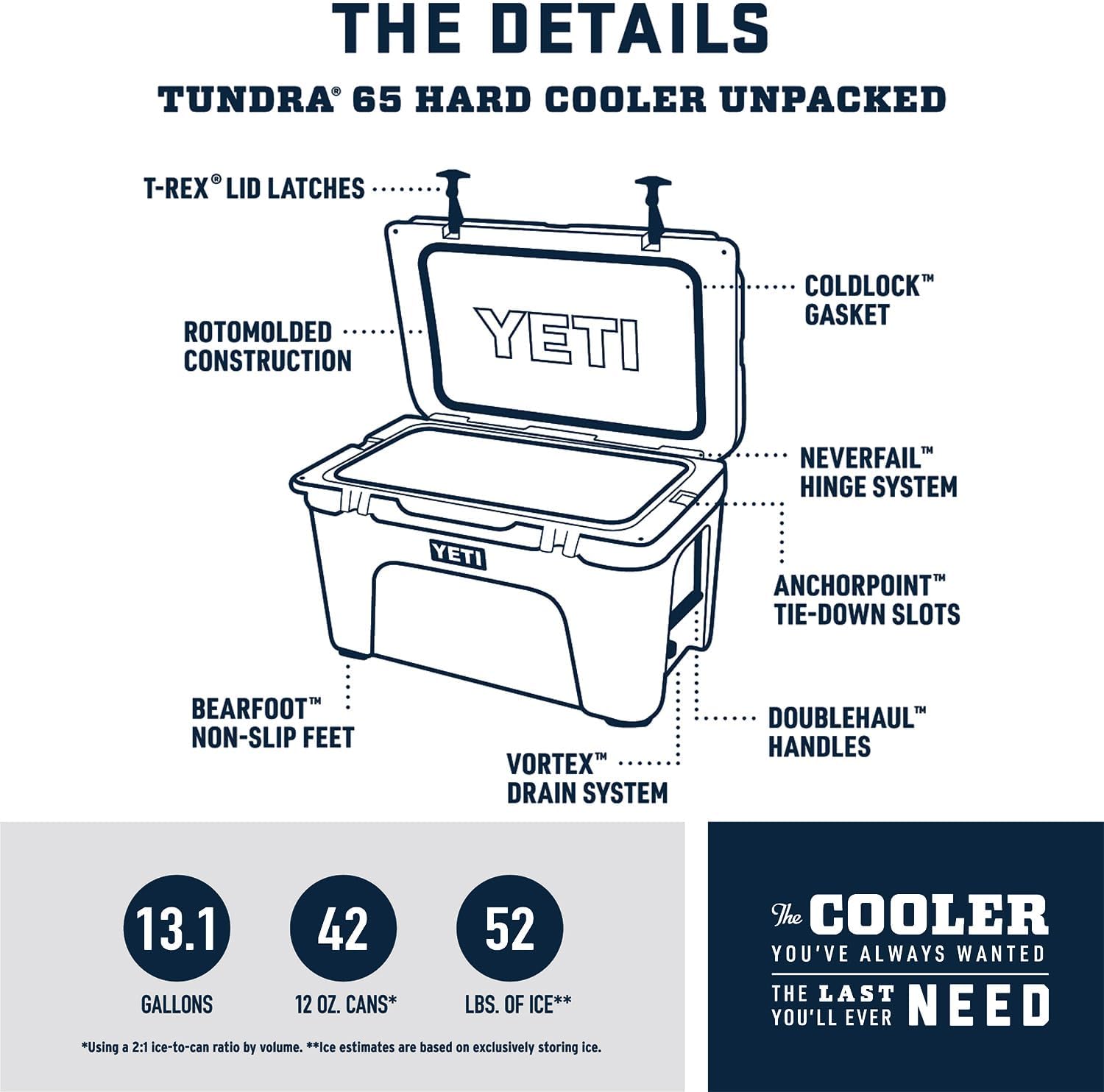
YETI’s Tundra series needs no introduction to anyone who’s spent time in an outdoor retailer in the last decade. The Tundra 45 (roughly 37-quart usable capacity) retails at $325, and the Tundra 65 (roughly 52-quart usable capacity) runs $375–$400. YETI’s manufacturer-rated ice retention sits at up to 7 days under ideal conditions for the Tundra series — a number the brand achieves through 2–3 inches of pressure-injected polyurethane foam walls, a freezer-grade gasket, and a T-rex lid latching system. Those figures come from YETI’s published Tundra series product specification pages.
RTIC entered the market as an explicit value challenger to YETI, offering comparable wall thickness — also 2–3 inches in their hard cooler lineup — at substantially lower price points. The RTIC 45-quart Ultra-Light Hard Cooler runs approximately $170–$190, and RTIC rates it for up to 5 days of ice retention per the RTIC Outdoors Hard Cooler lineup specification pages. RTIC’s lid latch systems and gasket designs are comparable to YETI’s at roughly half the price.
Specs at a glance — 54 to 65-quart tier, mid-2026 pricing:
| Model | Capacity | Ice Retention (Rated) | MSRP | Tier |
|---|---|---|---|---|
| Ninja FrostVault 54 qt | 54 qt | ~48 hrs | ~$199–$229 | RTIC — $183.20 |
| RTIC 45 Ultra-Light | 45 qt | Up to 5 days | ~$170–$190 | RTIC — $242.10 |
| YETI Tundra 65 | ~52 qt usable | Up to 7 days | ~$375–$400 | YETI — $395.00 |
Wirecutter’s guide “The Best Coolers” (wirecutter.com, 2025) notes that premium coolers justify their wall thickness and price precisely in multi-day scenarios — day trips and overnight camps don’t stress the gap much, but a four- or five-day backcountry base camp does.
Three Coolers, Three Use Cases
The Ninja FrostVault: Best for Organized Short-to-Mid Trips
RTIC
$183.20
In stock on Amazon
Check price on AmazonThe FrostVault’s strongest argument is organizational utility at an accessible price. For car campers and overlanders running one- to two-day trips — or even a long weekend where ice resupply is easy — 48 hours of rated ice retention is genuinely sufficient. The dry drawer is a purpose-built answer to a friction point that every cooler owner has experienced, and as of mid-2026, no YETI Tundra or Roadie model and no RTIC hard cooler in this price tier offers an equivalent integrated feature.
Gear Junkie’s 2025 FrostVault Cooler Review specifically flagged that the drawer adds meaningful camp organization without requiring a second piece of gear — no separate dry box, no soft-sided “dry cooler” riding alongside the main unit. For the buyer whose trips run Friday evening through Sunday afternoon and whose biggest recurring complaint is wet snacks and a damp phone, the FrostVault targets that pain point directly.
The structural tradeoff is real: the drawer adds mechanical complexity in the form of a moving part with a seal that can degrade over time, and it slightly reduces the cooler’s net cold-storage volume compared to a straight-walled competitor at the same price. For trips that stay within the rated 48-hour window under moderate ambient temperatures, that tradeoff works. For longer trips, it doesn’t.
Buy the Ninja FrostVault if: You primarily car camp or overland on trips of one to two days, you’ve already experienced the wet-keys-and-snacks problem and want it solved without a second gear purchase, and your budget ceiling is $200–$230.
RTIC
$183.20
In stock on Amazon
Check price on AmazonThe RTIC Hard Cooler: Best Specs-Per-Dollar for the Performance Buyer
RTIC
$242.10
In stock on Amazon
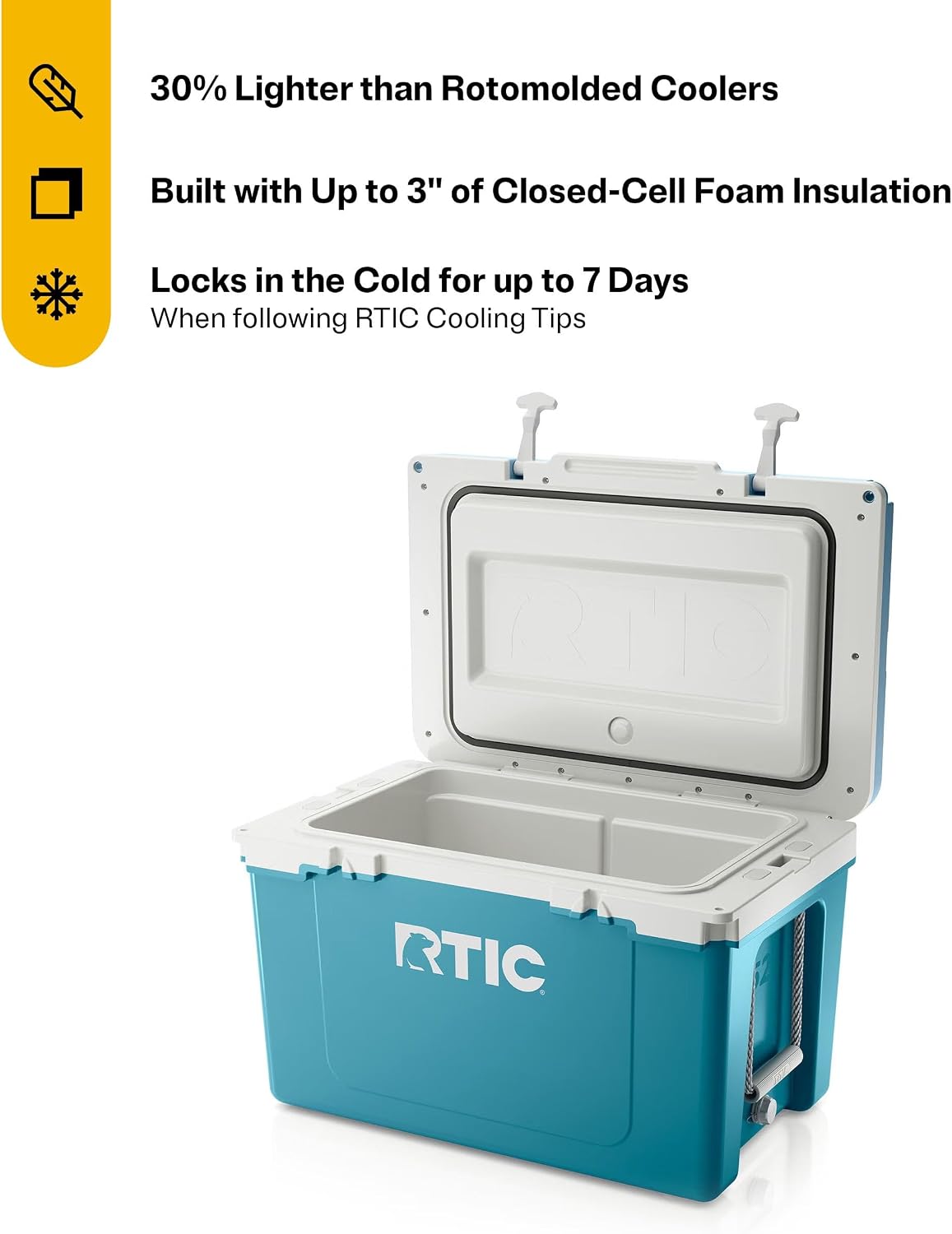
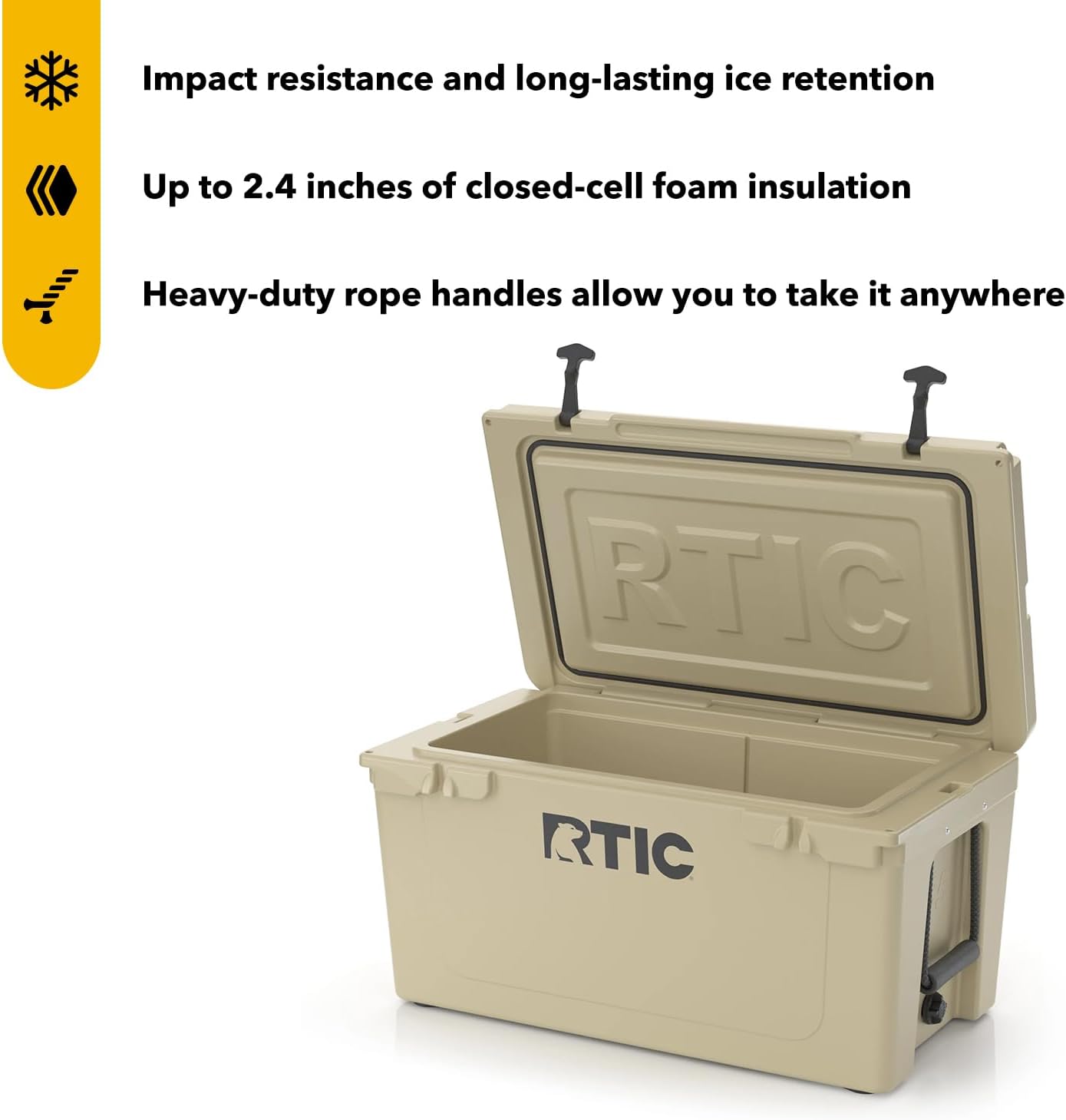
Check price on AmazonRTIC’s value proposition is blunt and effective: comparable wall thickness to YETI, comparable gasket construction, and up to five days of rated ice retention at roughly half the price. The RTIC 45-quart Ultra-Light Hard Cooler at $170–$190 is the most straightforward answer for a buyer who has internalized why premium coolers cost what they cost but doesn’t want to pay for the YETI logo.
Outside Online’s “Best Coolers of 2025” (outsideonline.com, 2025) called out RTIC as a legitimate performance alternative for buyers who need multi-day ice retention without the premium-brand markup. RTIC uses rotomolded construction — a single-piece plastic molding process that eliminates seams and improves impact resistance — across their hard cooler lineup, matching YETI’s construction method at a substantially lower price point per RTIC Outdoors’ published spec pages.
The honest gap relative to the FrostVault: RTIC offers no dry drawer and no integrated organizational feature. The honest gap relative to YETI: the brand has roughly half the track record for long-term durability data, and its customer service reputation, while generally solid, is less established. For buyers who run three- to five-day trips and ice resupply isn’t guaranteed, RTIC threads the needle between the FrostVault’s performance ceiling and YETI’s price ceiling.
Buy the RTIC Hard Cooler if: You need three to five days of ice retention, don’t require integrated dry storage, and want proven rotomolded construction without YETI’s price premium.
RTIC
$242.10
In stock on Amazon
Check price on AmazonThe YETI Tundra: Best for Multi-Day and Long-Haul Ownership
YETI
$395.00
In stock on Amazon
Check price on AmazonYETI’s durability case rests on roughly 15-plus years of owner data, aggressive brand testing, and near-universal agreement in aggregated review coverage that rotomolded construction survives hard use over time. Wirecutter’s “The Best Coolers” (wirecutter.com, 2025) has consistently cited YETI’s rotomolding and pressure-injected insulation as key differentiators for buyers who stress coolers across rough conditions — portaging, boat decks, truck beds where the unit gets dropped, slid, and knocked around over many seasons.
The Tundra 65’s up-to-seven-day rated ice retention is the highest in this comparison and the number that matters most on four-plus day overlanding trips, river runs where resupply isn’t an option, or expedition base camps. Outside Online’s “Best Coolers of 2025” specifically named the YETI Tundra series as the benchmark for multi-day performance in its category precisely because the insulation thickness required to deliver that retention window isn’t achievable at the Ninja’s wall depth and price point.
The price is real. At $375–$400 for the Tundra 65, the premium over RTIC is difficult to justify on specs alone for a buyer who never runs trips longer than three days. The secondary factors that move the math: YETI’s multi-year durability track record, its customer service infrastructure, and its resale value — a used YETI Tundra holds value in a way that few coolers in this category do. For the buyer who genuinely intends to own the cooler for eight to ten years and push it hard, those secondary factors are not marketing noise.
Buy the YETI Tundra if: You run four-plus day trips, portage the cooler through rough conditions, or are buying once and intend to keep it for a decade.
YETI
$395.00
In stock on Amazon
Check price on AmazonIce Retention: Translating the Spec Gap Into Real Trips
The 48-hour versus five-to-seven-day gap between the Ninja and YETI is the bluntest honest tradeoff in this comparison. Here’s how to translate it into real-world scenarios without relying on ideal-condition ratings:
Where 48 hours is completely fine: Day trips, overnight car camps, backyard gatherings, tailgates, beach days. If you’re repacking or buying ice every one to two days anyway, the Ninja’s rated window is irrelevant — you’ll never stress it.
Where it starts to matter: Three-day camping trips in summer heat. If the FrostVault is at the lower edge of its rated performance in 90°F ambient temperatures — which is where real-world performance reliably diverges from manufacturer ideal-condition numbers — you may be buying ice on day two of a three-day trip.
Where YETI and RTIC pull clearly ahead: Four-plus day overlanding trips, river trips where resupply isn’t possible, expedition base camps. This is the scenario where the insulation thickness gap between the Ninja and its competitors translates directly into whether your food is safe on day four.
Gear Junkie’s 2025 FrostVault Cooler Review noted that the FrostVault’s 48-hour rating reads as honest rather than inflated in field testing — the cooler performs as promised within its rated window, but it is genuinely not competing in the multi-day endurance tier and shouldn’t be evaluated as if it were.
Durability and Long-Term Ownership: What We Know and Don’t
YETI and RTIC both use rotomolded construction — a process that produces a single-piece shell with no seams to crack or separate under repeated impact. Wirecutter’s “The Best Coolers” (wirecutter.com, 2025) has consistently cited rotomolding as a key durability differentiator for buyers who treat their coolers hard over multiple seasons.
Ninja’s FrostVault uses injected-molded construction, which is less expensive to manufacture but generally considered less impact-resistant than rotomolding over years of field use. For stationary base camp use — the FrostVault’s strongest use case — this matters less than it does for a cooler being portaged over rocks or slid across a boat deck.
Honest caveat: the FrostVault launched in 2024, which means there is roughly 12–18 months of real-world owner data available as of this writing. The dry drawer’s gasket longevity under repeated use and UV exposure is a genuine unknown. No significant failure reports appeared in Gear Junkie’s 2025 review period, but multi-year durability simply cannot be extrapolated from a new product’s first field season. If you are buying a cooler you intend to own for a decade, YETI’s track record carries weight that specs alone cannot replicate.
The Bottom Line
No single cooler wins on every axis here. The FrostVault’s dry drawer is genuinely useful and currently unique in this price tier, but it does not compensate for its ice retention ceiling on trips longer than two days. YETI’s performance and durability are proven across more than a decade of owner data, but the price requires genuine commitment to the use case. RTIC threads the middle on specs-per-dollar for the buyer who needs multi-day retention without the premium markup and doesn’t need integrated dry storage.
The honest decision rule is simple: identify your longest realistic trip length and your biggest recurring friction point. If your trips run two days and wet gear is your problem, the Ninja FrostVault is a smart buy. If your trips run five days and cold retention is your problem, RTIC or YETI is the right answer — and which of those two depends on how hard you push the cooler and how long you intend to own it.