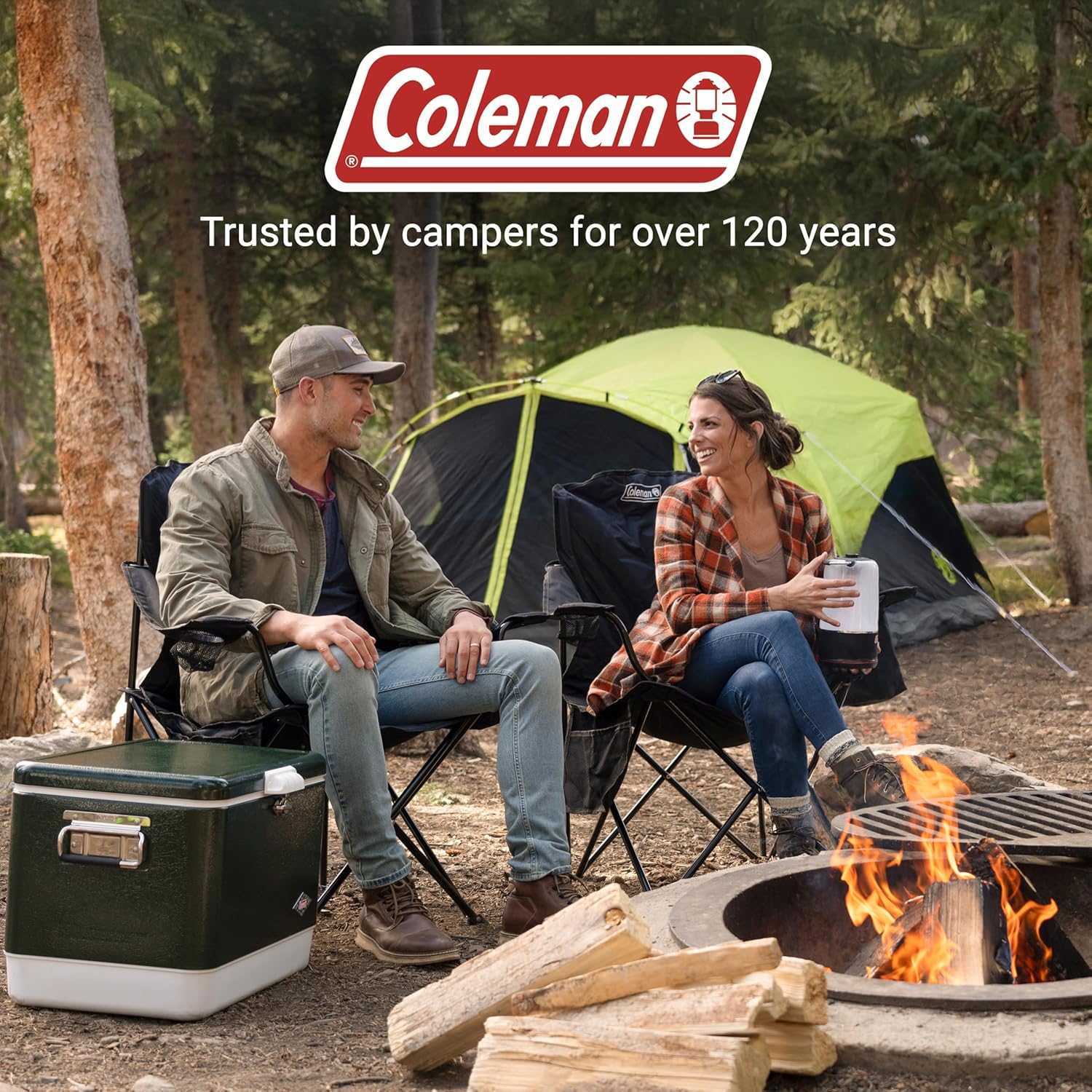
Picture this: it’s Saturday afternoon at a lake-access campsite, the sun is at its absolute most annoying angle, and the cooler is twenty feet away across a gravel pad. You’ve already made that walk four times since lunch. A camp chair with a built-in cooler bag sounds like an obvious fix — grab a seat, crack a drink, done. But if you’ve spent any time looking at these combo products, you’ve probably noticed that the cooler side of the deal ranges from genuinely useful to essentially decorative. A fabric sleeve stitched to a chair arm and a purpose-built, insulated side-bag that can hold ice for several hours are both marketed with the same vague promise of “cold drinks within reach.” This guide exists to help you tell the difference. We’ll break down how chair-mounted cooler bags actually work, which insulation specs matter, where the price-to-performance curve bends, and — if you’re trying to make a decision right now — exactly which scenarios favor which tier of product.
What “Built-In Cooler” Actually Means (And Why the Range Is So Wide)
The term covers an enormous spectrum. At the low end, you have a simple zippered pocket with a thin layer of PEVA lining — the same silver film used inside grocery tote bags. These are technically cooler bags in the sense that they slow heat transfer slightly better than bare fabric. In controlled conditions, a PEVA-lined pocket might keep a can chilled for 45 minutes to an hour past ambient temperature. In direct sun at 85°F, that window collapses fast.
Mid-range options step up to closed-cell foam insulation — typically 3mm to 6mm thick — sandwiched between an outer fabric shell and a food-safe liner. This is where retention starts to become genuinely useful: owners of chairs in the $60–$120 range with foam-core cooler bags consistently report keeping drinks acceptably cold for two to three hours with pre-chilled cans and a small ice pack, per aggregated reviews on outdoor retail platforms. No loose ice in these bags — the cavity is too small and the drainage design usually doesn’t exist — but for a six-pack of pre-chilled cans, they perform.
At the premium end, a handful of chairs integrate purpose-built, removable cooler pods that use the same insulation layering found in dedicated soft-sided coolers: 1/4-inch to 1/2-inch closed-cell foam plus a welded or heat-sealed inner liner with genuine leak resistance. Some of these pods are independently rated for 8–12 hours of ice retention when used with pre-frozen contents. The chair in this tier is usually a separate quality conversation — a well-constructed recliner or rocker — and the cooler is engineered alongside it rather than bolted on as an afterthought.
The framing that helps most: think of chair-mounted coolers as a convenience layer, not a replacement for a dedicated cooler. Even the best integrated cooler bag won’t substitute for a 20-quart hard-sided cooler sitting in the shade. The value proposition is reducing how often you leave your chair — not eliminating your main cooler.
The Insulation Specs That Actually Predict Cold Retention
If you’re reading product pages trying to sort this out, here are the three numbers and design features worth your attention.
Insulation thickness is the most reliable proxy for performance. Published specs from manufacturers across the category put it clearly: 3mm closed-cell foam is entry-level; 6mm is mid-tier; anything above 10mm (roughly 3/8 inch) starts to approach dedicated soft-cooler territory. GearJunkie’s roundup of camping chairs notes that chairs marketed seriously as cooler combos — not just chairs with a pocket — tend to specify foam thickness, while budget options often describe the liner material only.
Liner type and seal quality matter for two reasons: ice-melt containment and cleaning. A heat-sealed or RF-welded TPU liner won’t leak when ice melts; a stitched PEVA liner will eventually weep through the seam. If you plan to put any ice at all in the bag (even a gel pack), look for welded seams or an explicitly waterproof liner.
Bag volume is often listed but sometimes misleading. A 6-liter rating sounds useful, but if the bag’s opening is narrow or the shape is awkward, you’ll fit four cans at most. REI’s buying guide for camping chairs recommends cross-checking stated volume against real-world can capacity in user Q&A sections when available — a 5-liter bag in a reasonable rectangular layout will typically hold five to six 12-oz cans, which is the practical benchmark for a single-person session.
By the numbers
| Cooler bag tier | Insulation | Realistic cold retention (pre-chilled cans, moderate sun) | Typical chair price range |
|---|---|---|---|
| PEVA-lined pocket | 0–1mm film | 45–75 minutes | $25–$55 |
| Foam-core bag | 3–6mm closed-cell | 2–3 hours | $60–$130 |
| Premium insulated pod | 10mm+ / welded liner | 6–10 hours | $140–$220+ |
Retention estimates synthesized from manufacturer specs and aggregated owner reviews; actual performance varies with ambient temperature, sun exposure, and contents.
Where the Price-to-Performance Curve Bends
The $60–$130 foam-core tier is where most buyers will land, and for good reason — this is where you stop paying for a pocket and start paying for a functional cooler. CleverHiker’s camp chair buyer’s guide consistently highlights that mid-range chairs in this band tend to offer better overall chair construction and a more honest cooler implementation than budget models that compromise both to hit a $35–$40 price point.
The practical decision splits into two branches:
If the chair itself matters to you — meaning you care about seat depth, lumbar support, weight, or packability — then buy the chair on chair merits and treat the cooler bag as a secondary spec. A chair that fits poorly or collapses under regular use isn’t redeemed by a great cooler pocket. OutsideOnline’s camp chair coverage regularly emphasizes that frame construction and seat fabric tension are the primary longevity factors; the cooler is a feature, not the product.
If your primary goal is cold-drink access and you’re flexible on the chair, then reverse the selection order: identify the cooler-bag spec you need (see the table above), then find chairs that meet that spec within a comfortable budget. A few brands have leaned into this positioning — chairs with large, independently removable insulated side-bags that you can take to the cooler, fill, and snap back in — and these tend to show up in the $90–$160 range.
The premium tier (roughly $140–$220+) is harder to justify unless you’re using the setup for multi-hour events in high heat — tailgating, beach days, or basecamp setups where you’re truly stationary for five-plus hours. At that point, the math does favor a high-insulation pod: not having to restock from the main cooler multiple times is worth real money in convenience. But for a standard two- to three-hour campfire session, a mid-tier foam-core bag handles the job at half the cost.
Durability and Long-Term Value: What Owners Actually Report
Across aggregated reviews on outdoor retail platforms, two failure modes show up repeatedly in chair-cooler combos:
Zipper failure on the cooler bag is the most common complaint in the $25–$60 tier. Budget zippers on a bag that gets opened and closed dozens of times per season, often with wet or gritty hands, tend to separate at the slider or split at the bottom seam within one to two seasons of regular use. Mid-range and premium options typically spec YKK or equivalent hardware — worth confirming on the product page before buying.
Attachment degradation — where the cooler bag mounts to the chair — is the second pattern. Velcro attachments loosen over time and don’t recover well after washing. Clip-and-rail systems (a rigid rail on the chair arm with a matching hook on the bag) hold up far better and allow the bag to be repositioned or removed without wear to the chair itself. If you can find a photo of the attachment mechanism before buying, look for rigid hardware over Velcro.
Chair longevity is a separate but connected question. A $45 chair with a decent cooler bag that fails structurally after two seasons has a worse cost-per-season outcome than a $110 chair with a comparable cooler that runs for five to seven seasons. REI’s camping chair guidance flags steel vs. aluminum frame construction as the most predictable durability split: steel is heavier but more weld-forgiving; aluminum saves weight but requires tighter quality control at the joints to avoid flex-cracking over time.
The Decision Rule
Here’s the honest if/then framework for this category:
If you’re car-camping or overlanding with a full cooler already on site, and you want a drink-within-reach convenience layer, a mid-range foam-core chair combo in the $70–$120 range is the right call. You don’t need premium insulation because the main cooler is twenty feet away — you’re solving for fewer trips, not for off-grid cold retention.
If you’re at a multi-hour stationary event in heat — beach, tailgate, lake day with no shade — and the cooler is shared or inconveniently located, step up to a premium insulated pod. The 6–10 hour retention window justifies the price difference over a full-day outing.
If your budget is under $55 and you’re drawn to a chair that happens to have a cooler pocket, buy it for the chair, not for the cooler. Set the expectation at 60–90 minutes of marginal chill on pre-cold drinks, and you won’t be disappointed.
If the chair itself is mediocre but the cooler marketing is loud, that’s the clearest signal to skip the combo and buy separately. A quality standalone chair and a $20 soft-sided can sleeve will often outperform a purpose-built combo at the same price point — and the chair will last longer.
The category has genuinely improved over the past few model years, with more manufacturers specifying actual insulation thickness and liner construction rather than leaning on lifestyle imagery. That transparency makes the comparison easier — if a product page can’t tell you the foam thickness or liner type, that absence of information is itself informative.